omics.co.in logo omics.co.in
🧪 TRACK 17 • 12 MODULAR CHAPTERS MASS SPECTROMETRY • PRECISION ONCOLOGY LC-MS/MS • MSFRAGGER LFQ • XCMS 3 • SKYLINE
Orbitrap DDA/DIA Discovery • Untargeted Metabolomics • Machine Learning Panels • Targeted Validation

Clinical Proteomics & Metabolomics in Precision Oncology: LC-MS/MS Biomarker Discovery, Machine Learning Panels & Targeted MRM/PRM Validation

End-to-End High-Resolution Mass Spectrometry: DDA/DIA Discovery, Label-Free Quantification, Metabolite Peak Alignment, PLS-DA/Random Forest Classification, Skyline Targeted Assay Design & WHO CNS5 Brain Tumor Translation.

Bridge functional biochemistry and clinical decision-making. Move beyond genomic DNA variants into active proteomic phenotypes and metabolic rewiring. Master high-resolution Orbitrap and Q-TOF mass spectrometry, execute discovery workflows across Data-Dependent (DDA) and Data-Independent (DIA) acquisition, compute rigorous peptide-spectrum match FDRs and Label-Free Quantification (LFQ) via MSFragger and Philosopher, align untargeted metabolic features with XCMS 3, engineer machine learning classification panels using PLS-DA and Random Forests with nested cross-validation, design targeted MRM/PRM assays in Skyline, and navigate FDA/CLIA regulatory pathways (LDT vs. IVD) anchored in a 2021 WHO CNS5 Adult-Type Diffuse Glioma clinical benchmark.

📦 Production Mass Spectrometry & Metabolomics Stack R 4.4+ / Bioconductor / Skyline
# Install Core Discovery Proteomics & Metabolomics Toolchain in R
if (!requireNamespace("BiocManager", quietly = TRUE)) install.packages("BiocManager")
BiocManager::install(c("xcms", "MSnbase", "ropls", "mixOmics", "sva", "limma", "pheatmap", "tidyverse"))
# MSFragger, Philosopher & Skyline CLI binaries available in conda-forge
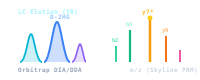
Clinical Proteomics & Metabolomics Graphic
Curriculum Specifications Track 17
Format & Duration
Self-Paced / Guided • 12 Modular Chapters
Mass Spectrometry Systems
Orbitrap Exploris • Q-TOF • Triple Quad (QQQ)
Computational Discovery
MSFragger LFQ • XCMS 3 • ropls • mixOmics
Targeted Validation & Regs
Skyline MRM/PRM • FDA/CLIA LDT vs. IVD Protocols
Clinical Benchmark Target
WHO CNS5 Adult Diffuse Glioma (IDH1 / D-2HG / 1p19q)
Academic Access
100% Free & Open Access
View 12 Modules ↓
🧪 View 12 Modules Curriculum ↗

🏥 Three Pillars of Clinical Mass Spectrometry Translation

Translational Oncology
Pillar 1 • WHO CNS5 Glioma Mapping

Integrated Oncometabolite & Phospho-Profiling

Integrating proteomic phosphorylation signatures and metabolomic D-2-hydroxyglutarate (D-2HG) accumulation to classify Astrocytoma IDH-mutant, Oligodendroglioma 1p/19q-codeleted, and Glioblastoma IDH-wildtype.

Pillar 2 • Targeted Assay Design

Skyline MRM & PRM Multiplex Verification

Transitioning from untargeted discovery into targeted clinical assays: transition selection, heavy isotope-labeled internal standards (AQUA), collision energy optimization, and lower limit of quantification (LLOQ) validation.

Pillar 3 • Regulatory Translation

LDT vs. IVD & Molecular Tumor Board

Overcoming pre-analytical cold ischemia drift, achieving CLIA/CAP analytical validity (precision, linearity, recovery), and synthesizing multi-omics findings into actionable molecular tumor board recommendations.

👥

Who Should Attend

🩺
Translational Researchers & Oncologists Bridging genomic mutations with functional proteomic and metabolomic phenotypes in patient tissues.
🧪
Mass Spectrometry & Analytical Chemists Moving from standard raw spectrum files into reproducible machine learning classification panels.
🔬
Clinical Laboratory Scientists & Pathologists Designing targeted MRM/PRM assays and navigating FDA/CLIA regulatory validation (LDT vs. IVD).
🎓
Proteomics PhD Scholars & Postdocs Mastering DDA/DIA spectra searching, LFQ quantification, XCMS 3 alignment, and Skyline targeted design.
🎯

Learning Outcomes

  • Execute Data-Dependent (DDA) and Data-Independent (DIA) Orbitrap mass spectrometry discovery workflows.
  • Compute peptide-spectrum match FDR control and Label-Free Quantification (LFQ) via MSFragger & Philosopher.
  • Align untargeted metabolomics chromatograms, pick peaks, and annotate adducts with XCMS 3.
  • Mitigate cold ischemia and batch drift using ComBat and defensive missing-value imputation.
  • Engineer supervised machine learning biomarker panels using PLS-DA and Random Forests with cross-validation.
  • Build targeted MRM/PRM verification assays in Skyline and translate findings into WHO CNS5 molecular glioma subtyping.
🔬 4-PHASE CURRICULUM ARCHITECTURE

Clinical Mass Spectrometry Roadmap & Benchmarks

Self-paced, hands-on masterclass curriculum structured into 4 foundational phases with production command-line recipes and clinical WHO CNS5 glioma mass spec datasets.

PHASE 1

Biology & Instrumentation

Modules 01–03 • Orbitrap DDA/DIA & Glioma Cohorts

  • Functional proteome, Warburg rewiring & oncometabolites
  • High-resolution Orbitrap & Q-TOF instrument principles
  • Data-Dependent (DDA) vs Data-Independent (DIA) acquisition
  • Cold ischemia & pre-analytical biospecimen variables
  • 2021 WHO CNS5 glioma molecular subtyping framework
PHASE 2

Biomarker Discovery

Modules 04–06 • MSFragger LFQ, XCMS 3 & Batch Effects

  • MSFragger ultrafast database search & decoy FDR
  • Label-Free Quantification (LFQ) via Philosopher
  • Untargeted metabolomics peak detection in XCMS 3
  • Retention time alignment & adduct deconvolution
  • ComBat batch adjustment & missing value imputation
PHASE 3

Machine Learning & MRM/PRM

Modules 07–09 • PLS-DA, Random Forests & Skyline

  • Candidate biomarker prioritization attrition funnel
  • Supervised PLS-DA with VIP score thresholding
  • Boruta Random Forest panels with nested CV
  • Targeted mass spec assay design in Skyline 23+
  • Transition selection & collision energy optimization
PHASE 4

Validation & MTB Translation

Modules 10–12 • LOD/LOQ, LDT vs IVD & Multi-Omics

  • Analytical LOD, LOQ, precision & linearity metrics
  • Diagnostic sensitivity, specificity, PPV & NPV
  • FDA/CLIA regulatory pathways: LDT vs IVD
  • Reimbursement barriers and companion diagnostics
  • Multi-omics brain tumor case studies for Tumor Boards
COURSE CURRICULUM

12 Comprehensive Modular Chapters

All modules include Orbitrap spectral recipes, R / Python scripts, and benchmark glioma datasets
MODULE 01 Phase 1: Biology & Mass Spec

Module 1: Beyond the Genome: The Functional Proteome, Metabolome & PTM Landscape in Oncology

Biological rationale for clinical mass spectrometry: why genomic DNA mutations alone fail to predict phenotype, kinase post-translational modifications (PTMs), oncometabolites, Warburg rewiring, and intratumoral heterogeneity.

🎯 Key Deliverables:
  • Functional proteome vs genome correlation & Warburg metabolic models
  • Biospecimen SOP checklist & WHO CNS5 diffuse glioma cohort mapping
Orbitrap DDA / DIA nanoESI WHO CNS5 Cohort QC
Explore Chapter 01 →
MODULE 02 Phase 1: Biology & Mass Spec

Module 2: Clinical Mass Spectrometry Foundations: LC-MS/MS Instrumentation, Orbitraps & DDA vs. DIA

Principles of high-resolution mass spectrometry: nanoflow electrospray ionization (nanoESI), quadrupole mass filters, Orbitrap and Time-of-Flight (TOF) analyzers, and Data-Dependent Acquisition (DDA) vs. Data-Independent Acquisition (DIA/SWATH).

🎯 Key Deliverables:
  • Functional proteome vs genome correlation & Warburg metabolic models
  • Biospecimen SOP checklist & WHO CNS5 diffuse glioma cohort mapping
Orbitrap DDA / DIA nanoESI WHO CNS5 Cohort QC
Explore Chapter 02 →
MODULE 03 Phase 1: Biology & Mass Spec

Module 3: Clinical Study Design, Biospecimen Quality Control & WHO CNS5 Brain Tumor Cohort Mapping

Pre-analytical biospecimen variables in translational oncology: cold ischemia impact, freeze-thaw cycles, biobanking SOPs, and the 2021 WHO CNS5 classification of adult-type diffuse gliomas.

🎯 Key Deliverables:
  • Functional proteome vs genome correlation & Warburg metabolic models
  • Biospecimen SOP checklist & WHO CNS5 diffuse glioma cohort mapping
Orbitrap DDA / DIA nanoESI WHO CNS5 Cohort QC
Explore Chapter 03 →
MODULE 04 Phase 2: Discovery & LFQ

Module 4: Proteomics Identification & Quantification: Database Searching, Target-Decoy FDR & LFQ

Computational identification of peptide spectra: cross-correlation scoring, false discovery rate (FDR) target-decoy benchmarking, protein parsimony inference, and label-free quantification (LFQ).

🎯 Key Deliverables:
  • MSFragger database search with 1% target-decoy protein FDR control
  • XCMS 3 peak picking matrix & ComBat batch-adjusted volcano plot
MSFragger Philosopher LFQ XCMS 3 ComBat Limma
Explore Chapter 04 →
MODULE 05 Phase 2: Discovery & LFQ

Module 5: Untargeted Metabolomics Processing: Peak Picking, Alignment & MSI Spectral Identification

High-throughput untargeted metabolomics data processing: XCMS feature detection, retention time alignment, adduct deconvolution, and Metabolomics Standards Initiative (MSI) confidence levels.

🎯 Key Deliverables:
  • MSFragger database search with 1% target-decoy protein FDR control
  • XCMS 3 peak picking matrix & ComBat batch-adjusted volcano plot
MSFragger Philosopher LFQ XCMS 3 ComBat Limma
Explore Chapter 05 →
MODULE 06 Phase 2: Discovery & LFQ

Module 6: Statistical Preprocessing & Cancer Signatures: Imputation, ComBat & Volcano Prioritization

Defensive biostatistics for mass spectrometry: Left-censored missing value imputation, ComBat batch adjustment, linear modeling with limma/MSstats, and pathway enrichment in cancer metabolism.

🎯 Key Deliverables:
  • MSFragger database search with 1% target-decoy protein FDR control
  • XCMS 3 peak picking matrix & ComBat batch-adjusted volcano plot
MSFragger Philosopher LFQ XCMS 3 ComBat Limma
Explore Chapter 06 →
MODULE 07 Phase 3: ML Panels & Skyline

Module 7: The Biomarker Attrition Funnel: Translating Discovery Omics Lists into Diagnostic Panels

Overcoming the biomarker translational gap: the clinical attrition funnel from 5,000 discovery features to 5-10 validated markers, biological plausibility filtering, secretome dynamics, and stability assays.

🎯 Key Deliverables:
  • Cross-validated PLS-DA VIP signature & Random Forest ROC curve
  • Skyline multiplex MRM/PRM spectral library with transition lists
ropls (PLS-DA) Boruta RF Skyline 23+ MRM / PRM AQUA
Explore Chapter 07 →
MODULE 08 Phase 3: ML Panels & Skyline

Module 8: Machine Learning for Biomarker Panels: PLS-DA, Random Forests & Overfitting Prevention

Designing multi-marker clinical classifier panels using supervised machine learning: Partial Least Squares Discriminant Analysis (PLS-DA), Random Forest Boruta selection, nested cross-validation, and ROC/AUC metrics.

🎯 Key Deliverables:
  • Cross-validated PLS-DA VIP signature & Random Forest ROC curve
  • Skyline multiplex MRM/PRM spectral library with transition lists
ropls (PLS-DA) Boruta RF Skyline 23+ MRM / PRM AQUA
Explore Chapter 08 →
MODULE 09 Phase 3: ML Panels & Skyline

Module 9: Targeted Mass Spectrometry: SRM/MRM, PRM Assays & Skyline Workspace Design

Transition from discovery to targeted clinical assays: Triple Quadrupole Selected Reaction Monitoring (SRM/MRM), Orbitrap Parallel Reaction Monitoring (PRM), stable isotope-labeled internal standards (SIL/AQUA), and Skyline assay design.

🎯 Key Deliverables:
  • Cross-validated PLS-DA VIP signature & Random Forest ROC curve
  • Skyline multiplex MRM/PRM spectral library with transition lists
ropls (PLS-DA) Boruta RF Skyline 23+ MRM / PRM AQUA
Explore Chapter 09 →
MODULE 10 Phase 4: Regs & Tumor Board

Module 10: Analytical & Clinical Validation Rigor: Calibration, LOD/LOQ & Diagnostic PPV/NPV

Rigorous analytical assay qualification following FDA bioanalytical guidelines: standard calibration curves, lower limit of detection (LOD), lower limit of quantification (LOQ), matrix effects, and ROC-derived clinical cut-offs.

🎯 Key Deliverables:
  • Analytical validity dossier (precision, linearity, recovery, LOD/LOQ)
  • Multi-omics tumor board molecular report for glioma patient triage
LOD / LOQ CLIA / CAP FDA LDT/IVD Molecular Tumor Board
Explore Chapter 10 →
MODULE 11 Phase 4: Regs & Tumor Board

Module 11: Regulatory Landscapes & Clinical Implementation: LDT vs. IVD, CLIA/CAP & Reimbursement

Navigating clinical adoption: Laboratory Developed Tests (LDTs) under CLIA/CAP vs. FDA In Vitro Diagnostics (IVD), companion diagnostics (CDx) co-development with targeted therapeutics, and health economic CPT coding.

🎯 Key Deliverables:
  • Analytical validity dossier (precision, linearity, recovery, LOD/LOQ)
  • Multi-omics tumor board molecular report for glioma patient triage
LOD / LOQ CLIA / CAP FDA LDT/IVD Molecular Tumor Board
Explore Chapter 11 →
MODULE 12 Phase 4: Regs & Tumor Board

Module 12: Integrative Multi-Omics Case Studies: WHO CNS5 Glioma Subtyping & Therapy Monitoring

Hands-on clinical synthesis: integrating quantitative D-2-hydroxyglutarate (D-2HG) oncometabolite profiling with targeted IDH1-R132H PRM assays, longitudinal liquid biopsy monitoring, and Molecular Tumor Board reporting.

🎯 Key Deliverables:
  • Analytical validity dossier (precision, linearity, recovery, LOD/LOQ)
  • Multi-omics tumor board molecular report for glioma patient triage
LOD / LOQ CLIA / CAP FDA LDT/IVD Molecular Tumor Board
Explore Chapter 12 →
Peer-Reviewed Foundations

📚 Foundational Literature & Methodology Benchmarks

Primary high-resolution mass spec, XCMS 3 & WHO CNS5 oncology citations for Track 17

🔬 Mass Spectrometry, MSFragger & Untargeted Metabolomics

  • Kong AT, Leprevost FV, Avtonomov DM, et al. (2017). MSFragger: ultrafast and comprehensive peptide identification in mass spectrometry-based proteomics. Nature Methods 14(5):513–520. doi:10.1038/nmeth.4256
  • Smith CA, Want EJ, O'Maille G, et al. (2006). XCMS: processing mass spectrometry data for metabolite profiling using nonlinear peak alignment, matching, and identification. Analytical Chemistry 78(3):779–787. doi:10.1021/ac051437y
  • Aebersold R, Mann M. (2016). Mass-spectrometric exploration of proteome structure and function. Nature 537:347–355. doi:10.1038/nature19949
  • Cox J, Mann M. (2008). MaxQuant enables high peptide identification rates, individualized p.p.b.-range mass accuracies and proteome-wide protein quantification. Nature Biotechnology 26:1367–1372. doi:10.1038/nbt.1511

🏥 Clinical Oncology, Targeted Assays & Precision Diagnostics

  • MacLean B, Tomazela DM, Shulman N, et al. (2010). Skyline: an open source document editor for creating and analyzing targeted proteomics experiments. Bioinformatics 26(7):966–968. doi:10.1093/bioinformatics/btq054
  • Louis DN, Perry A, Wesseling P, et al. (2021). The 2021 WHO Classification of Tumors of the Central Nervous System: a summary. Neuro-Oncology 23(8):1231–1251. doi:10.1093/neuonc/noab106
  • Dang L, White DW, Gross S, et al. (2009). Cancer-associated IDH1 mutations produce 2-hydroxyglutarate. Nature 462:739–744. doi:10.1038/nature08617
  • Leek JT, Johnson WE, Parker HS, et al. (2012). The sva package for removing batch effects and other unwanted variation in high-throughput experiments. Bioinformatics 28(6):882–883. doi:10.1093/bioinformatics/bts034

Looking for Other Bioinformatics Specializations?

Explore all 20 Flagship Curricula across Precision Oncology, Mass Spectrometry, Genomics, and Nextflow Cloud Pipelines.

Browse All 20 Curricula (252 Chapters) → Track 15: Precision Cancer Genomics (MTB) → Track 16: Long-Read Genomics & SVs →