
Flagship Bioinformatics & Computational Genomics Curricula
Master modern computational biology with structured, protocol-driven learning tracks. From foundation programming in Python, R, and Linux to deep generative single-cell modeling, Nextflow cloud pipelines, plant pan-genomics, AlphaFold 3 structural biology, molecular docking & virtual screening, WGCNA gene co-expression network analysis, third-generation long-read sequencing, and clinical proteomics. Each specialization features dedicated modular chapters, reproducible workflows, and verifiable real-world datasets.

Python for Next Gen Biologist
Comprehensive computational biology programming: object-oriented sequence representations, high-throughput FASTQ/BAM parsing, Biopython SeqIO, cancer machine learning, and 25 downloadable standalone CLI scripts.
- DNA/RNA sequence manipulation, IUPAC alphabet validation & regex
- Biopython SeqIO, AlignIO, PubMed API & BLAST query automation
- High-performance Pandas dataframe parsing for BED, VCF & GFF files
- Cancer classification modeling with scikit-learn & ROC evaluation

R for Next Gen Biologist
Statistical genetics and high-throughput omics computing: Bioconductor architectures, GenomicRanges overlaps, publication-quality ggplot2 charts, DESeq2 differential expression, and Seurat single-cell clustering.
- Tidyverse biological data wrangling & GenomicRanges intervals
- Publication volcano plots, heatmaps (ComplexHeatmap) & PCA ordination
- Bulk RNA-Seq negative binomial differential expression with DESeq2
- Pathway overrepresentation with clusterProfiler & Seurat single-cell
Linux for Bioinformatics
Command-line fluency for high-throughput life science: Unix filesystem hierarchies, defensive bash scripting, high-speed sed/awk genomic wrangling, Conda environment isolation, and SLURM HPC cluster computing.
- Core terminal streams, file permissions & defensive pipe handling
- Advanced Awk & Sed text wrangling for multi-gigabyte FASTQ/SAM/VCFs
- Conda & Mamba environment reproducibility & isolated lockfiles
- SLURM workload manager batch jobs, arrays & HPC memory allocation
Practical Genomics & NGS
The definitive next-generation sequencing analysis curriculum: library prep chemistries (Illumina, PacBio HiFi, Nanopore), FastQC trimming, BWA-MEM2 alignment, GATK4 germline & somatic variant calling, and de novo assembly.
- Sequencing chemistry benchmarks: Short-read vs PacBio HiFi & ONT
- Reference indexing, BWA-MEM2 alignment & Samtools duplicate marking
- GATK4 HaplotypeCaller, CNNScoreVariants & DeepVariant truth sets
- Somatic Mutect2 cancer calling, ClinVar annotation & VCF filtration
Bioinformatics: Introduction & Methods
Foundations of computational biology algorithms: Needleman-Wunsch & Smith-Waterman dynamic programming, BLAST heuristic search mechanics, multiple sequence alignment, molecular evolution, and Hidden Markov Models.
- Scoring matrices (PAM vs BLOSUM) & global/local dynamic programming
- BLAST algorithm heuristics, bit scores, Karlin-Altschul statistics & E-values
- Progressive & iterative multiple sequence alignment (Clustal Omega, MUSCLE)
- Phylogenetic tree reconstruction (Neighbor-Joining, Maximum Likelihood)
Single-Cell Genomics & Spatial Biology
Resolve cellular heterogeneity at single-cell and subcellular resolution: 10x Chromium microfluidics, Cell Ranger, Seurat v5 and Scanpy workflows, scVI generative modeling, RNA velocity (scVelo), and Visium/Xenium spatial transcriptomics.
- Droplet microfluidics, ambient RNA removal (SoupX) & doublet filtering
- SCTransform normalization, Harmony integration & UMAP clustering
- Deep generative batch correction with scVI & spliced/unspliced RNA velocity
- Spatial deconvolution on 10x Visium & subcellular segmentation on Xenium
Nextflow & Cloud Bio-Pipelines
Engineer production-grade workflow automation: Nextflow DSL2 dataflow channels, containerization with Docker and Singularity, nf-core architectural standards, and execution on AWS HealthOmics and HPC clusters.
- Nextflow DSL2 reactive dataflow channels, operators & modular processes
- Hermetic environment isolation with Docker, Singularity & Conda profiles
- Writing modular nf-core subworkflows & automated testing with pytest
- Cloud bursting on AWS Batch, AWS HealthOmics, Google Life Sciences & Seqera
Structural Bio & AlphaFold
3D protein structure prediction and AI macromolecular design: PyMOL visualization scripting, AlphaFold 2/3 Evoformers, pLDDT/PAE confidence evaluation, ESMFold, AutoDock Vina, and RFdiffusion de novo design.
- PDB/mmCIF structures, Ramachandran steric geometry & automated PyMOL
- AlphaFold 2/3 Evoformer architectures, MSA co-evolution & PAE matrix reading
- High-speed structure prediction with ESMFold & binding pocket detection
- Virtual screening with AutoDock Vina & de novo binders via RFdiffusion
Metagenomics & Microbiome Analysis
Deconvolute complex microbial ecosystems: 16S amplicon denoising (DADA2, QIIME 2), shotgun metagenomics, taxonomic classification (Kraken 2/Bracken), functional pathway profiling (HUMAnN3), and MAG binning.
- 16S amplicon primer trimming, DADA2 error rate modeling & ASVs
- Alpha & Beta ecological diversity, ordination & ANCOM-BC differential testing
- Host DNA decontamination, Kraken2 k-mer classification & Bracken abundance
- Metagenome assembly, MetaBAT2 binning, CheckM QA & AMR resistome profiling
Clinical Genomics & Oncology
Translational medicine and molecular oncology diagnostics: CLIA/CAP regulatory guidelines, ACMG/AMP 5-tier variant curation, OncoKB molecular tumor board interpretation, TMB/MSI biomarkers, and ctDNA liquid biopsies.
- CLIA/CAP regulatory validation standards & clinical germline/somatic testing
- ACMG/AMP 5-tier classification rules (PVS1, PM2, PP3) & ClinGen curation
- Actionable cancer alterations, OncoKB clinical tiers & TMB/MSI immunotherapy
- ctDNA liquid biopsy MRD monitoring & CPIC guideline pharmacogenomics
Plant, Polyploid & Non-Model Genomics
Master the computational bottlenecks of plant genomes: high repeat/TE content, polyploidy/WGD, and structural variation across pan-genomes with Hifiasm, EDTA, BRAKER3, Cactus, and GEMMA.
- K-mer profiling (GenomeScope 2.0 / Smudgeplot) & Hifiasm Hi-C phased assembly
- YaHS chromosome scaffolding, LAI > 20 benchmarking & EDTA de novo TE annotation
- BRAKER3 evidence-guided gene modeling, MCScanX synteny & Ks paleopolyploidy dating
- Minigraph-Cactus pan-genome graphs, Pixy population sweeps & GEMMA crop GWAS
- QTL-Seq bulked segregant analysis & rrBLUP genomic selection models
NGS Analysis & Clinical Variant Interpretation
Bridging bioinformatics to clinical decision making: FASTQ QC, BWA-MEM alignment, GATK BQSR, dual-track germline vs somatic calling, VEP annotation, and an exhaustive 28-criteria ACMG/AMP masterclass with Bayesian reporting.
- End-to-end pipeline: FastP → BWA → Picard MarkDuplicates → GATK BQSR
- Dual-track variant calling: Germline (HaplotypeCaller) vs Somatic (MuTect2)
- Annotation & databases: Ensembl VEP, gnomAD, ClinVar, COSMIC & OMIM
- Exhaustive ACMG/AMP masterclass: All 28 criteria & automated clinical reporting
Transcriptomics for Biomedical Research
Unlocking the secrets of gene expression: practical RNA-seq data analysis skills from beginner foundations (GEO/TCGA, normalization, PCA) to intermediate differential testing (DESeq2, GSEA, Cytoscape) and advanced single-cell frontiers (Seurat v5, WGCNA, CellTypist).
- Beginner: Study design, GEOquery/TCGA extraction, TPM/VST & PCA/t-SNE
- Intermediate: Negative Binomial DESeq2, EnhancedVolcano, Reactome & GSEA
- Networks: STRING PPI graph topology, Cytoscape RCy3 & X2K upstream kinases
- Advanced & Single-Cell: WGCNA co-expression, 10x Cell Ranger & Seurat v5 UMAP
Bioinformatics & Computational Molecular Biology
Comprehensive 15-module curriculum in molecular computing: sequence retrieval (NCBI/UniProt), GC skew & 6-frame translation, ORF finding, thermodynamic PCR primer design, in silico restriction cloning, CRISPR-Cas9 sgRNA engineering, BLAST & MSA, phylogenetics, PROSITE motifs, UGENE desktop workbench, PyMOL/PDB 3D structures, AlphaFold modeling, and microbial whole-genome sequencing (WGS).
- Part 1: NCBI/PDB sequence retrieval, GC composition, ORF finding & Primer3
- In Silico Cloning: Type II restriction digestion, agarose simulation & CRISPR-Cas9 sgRNAs
- Alignments & Evolution: Pairwise BLAST, Clustal/MUSCLE MSA & Phylogenetic Trees
- Workbenches & 3D AI: UGENE visual workflows, PyMOL structures, AlphaFold & WGS
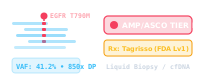
Precision Cancer Genomics: From Biopsy to Molecular Tumor Board
End-to-end clinical oncology NGS workflow: assay design (panels vs CGP, liquid biopsy cfDNA), wet-lab FFPE quality control, Galaxy somatic variant calling (BWA, Picard, Mutect2, PoN), IGV hotspot validation, AMP/ASCO/CAP clinical tiering, and longitudinal patient case studies (Lung, Colon, Breast).
- Wet-Lab & QC: FFPE deamination, DIN/Q-scores, UMI error suppression & 10-gene lung panel design
- Galaxy Pipelines: Fastp trimming, BWA-MEM alignment, Picard MarkDuplicates & Mutect2 + PoN
- Hotspots & Filters: IGV strand bias, homopolymer artifacts, LoFreq & population frequency filtering
- Clinical Actionability: AMP/ASCO/CAP Tiers I–IV, Oncogenicity criteria, OncoKB, CIViC & MTB reports
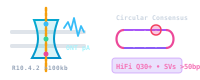
Long-Read Genomics & Structural Variants
Production-grade long-read sequencing curriculum: Nanopore R10.4.1/Dorado basecalling, PacBio Revio HiFi CCS generation, Minimap2 long-read alignment, Sniffles2/cuteSV structural variant benchmarking, complex SVs (inversions, translocations, retrotransposons), repeat expansions (C9orf72), native 5mC/6mA methylation, and telomere-to-telomere (T2T) assemblies.
- Nanopore & PacBio Chems: R10.4.1 pore biophysics, Dorado basecalling models & Revio dual-laser SMRT sequencing
- Long-Read QC & Mapping: NanoPlot, Chopper length/quality filtering, and Minimap2 preset parameter optimization
- Structural Variant Calling: Sniffles2, cuteSV, and pbsv benchmarking across GIAB HG002 benchmark genomes
- Epigenetics & Phasing: Native 5mC/6mA methylation calling, modkit, and WhatsHap long-range chromosome phasing
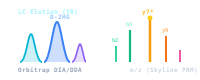
Clinical Proteomics & Metabolomics
End-to-end mass spectrometry masterclass: high-resolution Orbitrap/Q-TOF instrumentation, DDA peptide identification (MSFragger/FragPipe), DIA-NN library-free quantification, XCMS untargeted metabolomics peak alignment, machine learning biomarker panels (Random Forest, nested CV), and targeted clinical MRM/PRM validation in Skyline.
- Mass Spectrometry Systems: Orbitrap vs Q-TOF ion physics, electrospray ionization & collision-induced dissociation
- Discovery Pipelines: FragPipe/MSFragger LFQ proteomics and XCMS CAMERA untargeted metabolomics feature extraction
- Multivariate & ML Modeling: PCA, PLS-DA, Random Forests, nested cross-validation & feature importance ranking
- Clinical Assay Transition: PRM/MRM targeted assay design, isotope-labeled standard spiking & Skyline assay validation
Practical NGS & RNA-Seq Data Analysis
The complete hands-on transcriptomics training: raw FASTQ quality control (FastQC/MultiQC), fastp adapter/poly-G trimming, HISAT2 spliced alignment against human/mouse reference genomes, featureCounts gene expression matrix building, DESeq2 negative binomial dispersion shrinkage, publication-grade visualization (PCA, Volcano, Heatmap, MA plots), and downstream STRING protein interaction network enrichment.
- Quality Assessment & SRA: Phred $Q \ge 30$, FastQC, MultiQC aggregation & fasterq-dump automation
- Preprocessing & Spliced Mapping: fastp quality trimming and HISAT2 HGFM spliced alignment
- Gene-Level Quantification: featureCounts paired fragment parsing, stranded counting & matrix formatting
- Statistical DGE & Networks: DESeq2 Wald testing, apeglm LFC shrinkage, pheatmap & STRING PPI clusters
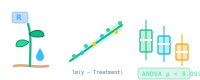
Statistical Analysis for Environmental Science Using R
Turn field and laboratory measurements into solid scientific conclusions. Master data tidying (tidyverse/readxl), descriptive parameters, parametric assumptions (Shapiro-Wilk, Levene's), hypothesis testing (t-tests, ANOVA, Tukey HSD, Kruskal-Wallis), linear regression modeling, and publication-ready ggplot2 figures.
- Core Foundations: Data types, tidyverse manipulation, outlier detection, and IQR/Z-score rules
- Parametric QC: Testing normality, homoscedasticity, and mathematical transformations (log, square root)
- Statistical Tests: One-way/two-way ANOVA, post-hoc pairwise adjustments, and non-parametric alternatives
- Publication Graphics: Building 300+ DPI multi-panel figures with ggplot2, patchwork, and theme customization
RNA-Seq for Plant Biotechnology in R
Decode abiotic stress response in crops: real experimental RNA-seq datasets (PRJNA779532 / *Solanum tuberosum*), spliced alignment against the DM1-3 v6.1 genome, count normalization, DESeq2 differential expression, ABA & osmoprotectant signaling cascades, and clusterProfiler Gene Ontology & KEGG pathway enrichment.
- Crop Biology Focus: Dissecting drought stress pathways, ABA-mediated stomatal closure, LEA proteins, and proline accumulation
- End-to-End R Pipeline: From raw FastQC metrics through HISAT2/featureCounts quantification to DESeq2 Wald testing
- Publication-Ready Visuals: Generating customized volcano plots, clustered heatmaps, PCA projections, and MA diagnostics
- Functional Enrichment: Mapping potato DEG sets to GO biological processes, molecular functions, and KEGG metabolic maps
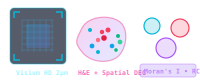
Spatial Transcriptomics Data Analysis
Master single-cell resolution spatial biology: 10x Genomics Visium HD technology (2 µm & 8 µm continuous square bins), Space Ranger 3.0 processing, Seurat v5 spatial objects, BPCells out-of-core on-disk computation, cell-type deconvolution (RCTD), Moran's I & nnSVG spatial variable gene discovery, and histological microenvironment dissection.
- Visium HD Architecture: Dual 2 µm oligonucleotides, poly-A capture on glass slides & automated cytological alignment
- High-Performance R: Integrating BPCells for fast on-disk matrix parsing and memory-efficient Seurat v5 normalization
- Cell-Type Deconvolution: Robust Cell Type Decomposition (RCTD) referencing scRNA-seq atlases for sub-cellular mapping
- Spatial Statistics: Spatial Autocorrelation with Moran's I and nnSVG to identify tissue-localized disease marker genes
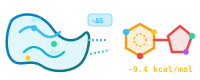
Molecular Docking & Virtual Screening
Master computational biophysics and lead discovery: macromolecular receptor & ligand preparation (PROPKA, MMFF94, PDBQT), scoring function biophysics, AlphaFold structure modeling, CB-Dock2 cavity detection, PyRx multi-threading, and SARS-CoV-2 Mpro virtual screening with PyMOL/BIOVIA interaction profiling.
- Biophysical Principles: Thermodynamic free energy of binding (ΔG = ΔH - TΔS) and non-covalent forces
- Preparation & Formats: PDBQT anatomy, PROPKA pH 7.4 protonation, Kollman charges, and OpenBabel minimization
- Virtual Screening & AI: Lipinski Rule of 5, PAINS filtering, AlphaFold2 pLDDT validation, and CB-Dock2 cavities
- Docking Execution: PyRx GUI, AutoDock Vina CLI multi-threading, flexible residues, and PyMOL 3D interaction diagrams
WGCNA: Weighted Gene Co-expression Network Analysis in R
Discover functional gene modules and key regulators: Scale-Free Topology Criterion ($\beta$ power selection), Topological Overlap Matrix (TOM), Dynamic Tree Cut module detection, Module Eigengenes (ME), trait-based association analysis, hub gene identification via kME, and Cytoscape/igraph network export.
- Mathematical Foundations: Adjacency power functions, scale-free topology fitting ($R^2 \ge 0.85$), and TOM dissimilarity
- Clustering & Modules: Hierarchical clustering, Dynamic Tree Cut parameter tuning, and module merging by correlation ($r > 0.75$)
- Trait Associations: Module Eigengene (ME) correlation with phenotypic traits, gene significance (GS), and intramodular connectivity (kME)
- Network Export: Extracting top edges, exporting to Cytoscape format, and hub gene functional enrichment in clusterProfiler
Epigenomics: ChIP-Seq Data Analysis & Chromatin Dynamics
Decode transcriptional regulation and chromatin modifications: cross-linking, sonication QC, Bowtie2 alignment, MACS3 narrow/broad peak calling against genomic input controls, deepTools signal normalization, ChIPseeker peak annotation, and DiffBind differential binding analysis.
- Experimental Design: Transcription factor (narrow peak) vs histone mark (broad peak: H3K4me3, H3K27ac) strategies
- Peak Calling & QC: MACS3 shifting model, d-value estimation, cross-correlation metrics & irreproducible discovery rate (IDR)
- Signal Profiling: deepTools bamCompare, computeMatrix & plotHeatmap across transcription start sites (TSS)
- Differential Binding: DiffBind affinity modeling, edgeR/DESeq2 differential binding & ChIPseeker genomic feature mapping
No matching courses found
Try adjusting your search terms or selecting a different category tab.
The 4-Stage Computational Biologist Roadmap
Follow our recommended sequential training pathway designed to take life scientists and computational researchers from foundational scripting to scalable cloud pipelines and clinical translation.
Foundations & Pipelines
Master Linux, Python, R, biostatistics, Nextflow DSL2 and core sequence algorithms.
Genomics & RNA-Seq
High-throughput short/long-read mapping, differential expression, and networks.
Single-Cell & Plants
High-resolution cellular mapping, mass spectrometry, and complex polyploids.
Clinical & Drug Discovery
Translational oncology curation, ACMG criteria, AlphaFold 3 and virtual screening.
Supporting Practical Learning Ecosystem
Every curriculum connects to our open suite of interactive tools, toy datasets, and downloadable scripts.
Interactive Bio-Calculators
SAM flag bitwise decoder, sequencing depth calculator, flow cell multiplexing, and genomic coordinate converters.
Downloadable Python Scripts
25 standalone CLI scripts for FASTQ filtering, BAM statistics, VCF annotation, and FASTA extraction.
Subsampled Toy Datasets
Lightweight 100k FASTQs, mini-BAMs, and GIAB truth benchmarks designed to execute in < 3 mins on any laptop.
Bioinformatics Cheat Sheets
Instant field-by-field reference for SAM, BAM, VCF, and command one-liners for samtools & bcftools.