omics.co.in logo omics.co.in
🔬 TRACK 15 • 12 MODULAR CHAPTERS CLINICAL NGS • MOLECULAR PATHOLOGY GALAXY PIPELINES • AMP/ASCO/CAP TIERS • MTB
Medical Oncology • Surgical Pathology • Clinical Bioinformatics • Translational Cancer Biology

Precision Cancer Genomics: From Biopsy to Molecular Tumor Board

End-to-End Clinical NGS Workflow: Assay Design, Galaxy Bioinformatic Pipelines, AMP/ASCO/CAP Tiering & Real-World Patient Cases (Lung, Colon, Breast).

Master the complete translational pipeline from clinical specimen handling (FFPE, fresh-frozen, liquid biopsy cfDNA) to actionable clinical decision-making. Learn directly from the combined perspectives of a Wet-Lab Specialist (library QC, hybrid-capture panels, UMI de-duplication), a Bioinformatician (Galaxy somatic pipelines, Mutect2, Panel of Normals, IGV artifact curation), and a Clinical Geneticist (AMP/ASCO/CAP 2017 Tiers I–IV, OncoKB, CIViC, clinical trial matching, and multidisciplinary tumor board reporting).

📦 Production Somatic NGS & Variant Interpretation Stack GATK4 / Mutect2 / BWA / VEP / IGV
# Install Somatic Variant Calling & Clinical Annotation Environment
conda create -n cancer_ngs -c bioconda -c conda-forge gatk4 bwa samtools picard snpeff vep -y
conda activate cancer_ngs
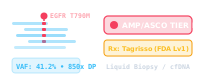
Precision Cancer Genomics & MTB Graphic
Curriculum Specifications Track 15
Format & Duration
Self-Paced / Guided • 12 Modular Chapters
Diagnostic Assays
Hybrid-Capture • CGP Panels • cfDNA Liquid Biopsy
Somatic Pipelines
BWA-MEM • GATK4 Mutect2 • PoN • Galaxy GUI
Clinical Tiering
AMP/ASCO/CAP 2017 Tiers I–IV • OncoKB • CIViC
Tumor Board Benchmarks
NSCLC (EGFR/MET) • CRC (KRAS/BRAF) • Breast (BRCA/HRD)
Academic Access
100% Free & Open Access
View 12 Modules ↓
🔬 View 12 Modules Curriculum ↗

🩺 Three Comprehensive Molecular Tumor Board (MTB) Patient Cases

Phase 4 Clinical Translation
Case 1 • Thoracic Oncology

Stage IV Non-Small Cell Lung Cancer

Primary EGFR exon 19 deletion, acquired resistance on Osimertinib via EGFR C797S and MET focal gene amplification, plus cfDNA monitoring for residual disease.

Case 2 • Gastrointestinal Oncology

Metastatic Colorectal Adenocarcinoma

Assessing KRAS / NRAS / BRAF V600E mutational status, MLH1 promoter hypermethylation with Microsatellite Instability-High (MSI-H), and Pembrolizumab immunotherapy triage.

Case 3 • Breast & Gynecologic Oncology

High-Grade Metastatic Breast Cancer

Clonal TP53 missense, deleterious germline/somatic BRCA1 frameshift with high HRD genomic instability score (PARP inhibitor eligibility), and focal ERBB2 (HER2) amplification.

👥

Who Should Attend

🩺
Medical Oncologists & Fellows Interpreting comprehensive genomic profiling (CGP) reports, targeted off-label therapies, and clinical trial options.
🔬
Molecular Pathologists & Lab Directors Optimizing FFPE tissue extraction, hybrid-capture bait design, liquid biopsy cfDNA limits, and CLIA/CAP compliance.
💻
Clinical Bioinformaticians Implementing somatic mutation callers (Mutect2, VarDict), custom Panel of Normals (PoN), and artifact filtering.
🎓
Cancer Genomics PhD Scholars Mastering clinical variant classification, OncoKB, CIViC, and multidisciplinary Molecular Tumor Board reporting.
🎯

Learning Outcomes

  • Select optimal clinical NGS assays: hotspot panels vs CGP vs cfDNA liquid biopsy.
  • Evaluate wet-lab library QC metrics: FFPE deamination, fragment size, uniformity, and UMI deduplication.
  • Execute end-to-end somatic pipelines with BWA-MEM, Picard, and GATK4 Mutect2 using a Panel of Normals.
  • Inspect real somatic hotspot alignments (EGFR, KRAS, TP53) and filter sequencing artifacts in IGV.
  • Annotate and stratify somatic variants according to 2017 AMP/ASCO/CAP consensus Tiers I–IV.
  • Formulate actionable Molecular Tumor Board consensus reports across real-world Lung, Colon, and Breast patient cases.
🔬 4-PHASE CURRICULUM ARCHITECTURE

Precision Cancer Genomics Roadmap & Benchmarks

Self-paced, hands-on masterclass curriculum structured into 4 foundational phases with production command-line recipes and clinical oncology BAM/VCF benchmarks.

PHASE 1

Assay Strategy & Lab Workflow

Modules 01–03 • CGP, FFPE QC & Pan-Cancer Biomarkers

  • Diagnostic cancer testing: targeted panels vs CGP vs cfDNA
  • Somatic vs germline alterations & actionable drivers
  • Amplicon vs hybrid-capture chemistry & FFPE artifacts
  • Library QC metrics: Q-scores, insert size, uniformity
  • Pan-cancer biomarkers: TMB, MSI, VAF, CNV & LOH
PHASE 2

Data Processing & IGV Curation

Modules 04–06 • Formats, Mutect2 & Hotspots

  • Anatomy of raw sequencing formats: FASTQ Phred+33
  • Coordinate-sorted BAM flags & VCF 4.2 architecture
  • GATK Mutect2 architecture & Panel of Normals (PoN)
  • Filtering low-VAF mutations & FFPE deamination
  • IGV manual curation: EGFR, KRAS, TP53 hotspots
PHASE 3

Galaxy Somatic Pipeline

Modules 07–09 • BWA-MEM, Filtering & VEP

  • End-to-end Galaxy pipeline execution from FASTQ to BAM
  • BWA-MEM paired-end alignment & Picard MarkDuplicates
  • Somatic calling with Mutect2 & FilterMutectCalls
  • Variant annotation with Ensembl VEP & SnpEff
  • COSMIC and ClinVar database integration
PHASE 4

Clinical Tiers & Tumor Board

Modules 10–12 • AMP/ASCO/CAP & Patient Reports

  • 2017 AMP/ASCO/CAP clinical tiering (Tiers I–IV)
  • OncoKB & CIViC levels of evidence
  • Complex biomarkers: gene fusions, amplifications, TMB
  • Molecular Tumor Board case studies (Lung, Colon, Breast)
  • Clinical reporting standards & therapeutic recommendations
COURSE CURRICULUM

12 Comprehensive Modular Chapters

All modules include Galaxy somatic recipes, Mutect2 command lines, and clinical BAM/VCF benchmarks
MODULE 01 Phase 1: Assays & Lab QC

Module 1: Clinical Cancer NGS & Assay Strategy: Targeted Panels, CGP, WES & Liquid Biopsy

Evolution of diagnostic cancer testing from single-gene assays to Comprehensive Genomic Profiling (CGP) and cell-free DNA (cfDNA) liquid biopsies, somatic vs germline concepts, and driver vs actionable alterations.

🎯 Key Deliverables:
  • Clinical NGS assay selection flowchart & 10-gene lung panel design
  • FFPE deamination artifact mitigation & pan-cancer biomarker table
CGP Panels Hybrid Capture FFPE QC UMI Liquid Biopsy
Explore Chapter 01 →
MODULE 02 Phase 1: Assays & Lab QC

Module 2: Wet-Lab Quality Control, Library Metrics & Oncology Panel Design

Amplicon vs hybrid-capture chemistry, FFPE deamination artifacts, library preparation QC metrics (Q-scores, insert size, uniformity), and designing an oncology 10-gene panel.

🎯 Key Deliverables:
  • Clinical NGS assay selection flowchart & 10-gene lung panel design
  • FFPE deamination artifact mitigation & pan-cancer biomarker table
CGP Panels Hybrid Capture FFPE QC UMI Liquid Biopsy
Explore Chapter 02 →
MODULE 03 Phase 1: Assays & Lab QC

Module 3: Pan-Cancer Biomarkers: TMB, MSI, VAF, CNV & Loss of Heterozygosity

Mathematical and clinical definitions of Tumor Mutational Burden (TMB), Microsatellite Instability (MSI), Variant Allele Fraction (VAF), Copy Number Alterations (CNV), and Loss of Heterozygosity (LOH).

🎯 Key Deliverables:
  • Clinical NGS assay selection flowchart & 10-gene lung panel design
  • FFPE deamination artifact mitigation & pan-cancer biomarker table
CGP Panels Hybrid Capture FFPE QC UMI Liquid Biopsy
Explore Chapter 03 →
MODULE 04 Phase 2: Mutect2 & IGV

Module 4: Oncology File Formats, Phred Scores & Alignment Concepts: FASTQ, BAM & VCF

Anatomy of raw sequencing formats (FASTQ Phred+33), coordinate-sorted BAM/CRAM alignment flags, VCF 4.2 architecture, INFO and FORMAT field parsing, and quality metrics.

🎯 Key Deliverables:
  • Custom Panel of Normals (PoN) recipe & low-VAF somatic filter script
  • IGV manual curation guide for EGFR, KRAS, and TP53 cancer hotspots
BWA-MEM GATK Mutect2 PoN IGV Browser Phred+33
Explore Chapter 04 →
MODULE 05 Phase 2: Mutect2 & IGV

Module 5: Somatic Variant Calling Paradigms: Mutect2, Panel of Normals & Low-VAF Detection

Tumor-normal paired vs tumor-only calling, GATK Mutect2 architecture, generating a Panel of Normals (PoN), filtering FFPE deamination, and detecting low-VAF subclonal mutations.

🎯 Key Deliverables:
  • Custom Panel of Normals (PoN) recipe & low-VAF somatic filter script
  • IGV manual curation guide for EGFR, KRAS, and TP53 cancer hotspots
BWA-MEM GATK Mutect2 PoN IGV Browser Phred+33
Explore Chapter 05 →
MODULE 06 Phase 2: Mutect2 & IGV

Module 6: Read-Level Verification & Visualizing Somatic Hotspots in IGV

Navigating BAM alignments in the Integrative Genomics Viewer (IGV), inspecting diagnostic cancer hotspots (EGFR L858R, KRAS G13D, TP53), and identifying alignment red flags.

🎯 Key Deliverables:
  • Custom Panel of Normals (PoN) recipe & low-VAF somatic filter script
  • IGV manual curation guide for EGFR, KRAS, and TP53 cancer hotspots
BWA-MEM GATK Mutect2 PoN IGV Browser Phred+33
Explore Chapter 06 →
MODULE 07 Phase 3: Galaxy Pipelines

Module 7: Hands-On Somatic Pipeline Execution: FastQC, BWA-MEM & Picard Deduplication

Step-by-step guided execution of an end-to-end somatic bioinformatics pipeline in Galaxy: quality trimming with fastp, BWA-MEM alignment, and Picard MarkDuplicates.

🎯 Key Deliverables:
  • Reproducible Galaxy workflow from raw FASTQ to filtered somatic BAM
  • Comprehensive VEP & SnpEff functional annotation matrix
Galaxy GUI Picard MarkDup FilterMutectCalls Ensembl VEP COSMIC
Explore Chapter 07 →
MODULE 08 Phase 3: Galaxy Pipelines

Module 8: Somatic Mutation Discovery: GATK Mutect2 & FilterMutectCalls

Executing Mutect2 on target capture BED regions, integrating Panel of Normals (PoN), calculating contamination with GetPileupSummaries, and executing FilterMutectCalls.

🎯 Key Deliverables:
  • Reproducible Galaxy workflow from raw FASTQ to filtered somatic BAM
  • Comprehensive VEP & SnpEff functional annotation matrix
Galaxy GUI Picard MarkDup FilterMutectCalls Ensembl VEP COSMIC
Explore Chapter 08 →
MODULE 09 Phase 3: Galaxy Pipelines

Module 9: Somatic Variant Annotation & Filtering: VEP, SnpEff, gnomAD & COSMIC

Functional annotation using Ensembl VEP and SnpEff, integrating somatic (COSMIC), population (gnomAD), and clinical (ClinVar, OncoKB) databases, and exporting filtered mutation tables.

🎯 Key Deliverables:
  • Reproducible Galaxy workflow from raw FASTQ to filtered somatic BAM
  • Comprehensive VEP & SnpEff functional annotation matrix
Galaxy GUI Picard MarkDup FilterMutectCalls Ensembl VEP COSMIC
Explore Chapter 09 →
MODULE 10 Phase 4: Tiers & Tumor Board

Module 10: Somatic Interpretation Frameworks: AMP/ASCO/CAP Tiers & ClinGen Criteria

Clinical classification of somatic variants under AMP/ASCO/CAP 2017 guidelines (Tiers I–IV, Evidence Levels A–D), ClinGen/CGC/VICC oncogenicity specifications, and managing VUSs.

🎯 Key Deliverables:
  • Four-tier clinical actionability classification (Tiers I–IV)
  • Complete Molecular Tumor Board consensus report for NSCLC & CRC
AMP/ASCO/CAP OncoKB CIViC Molecular Tumor Board
Explore Chapter 10 →
MODULE 11 Phase 4: Tiers & Tumor Board

Module 11: Complex Alterations: Gene Fusions, Amplifications & Immunotherapy Eligibility

Detecting actionable oncogenic gene fusions (ALK, ROS1, NTRK), focal gene amplifications (ERBB2, MET), and integrating TMB/MSI for immune checkpoint inhibitor selection.

🎯 Key Deliverables:
  • Four-tier clinical actionability classification (Tiers I–IV)
  • Complete Molecular Tumor Board consensus report for NSCLC & CRC
AMP/ASCO/CAP OncoKB CIViC Molecular Tumor Board
Explore Chapter 11 →
MODULE 12 Phase 4: Tiers & Tumor Board

Module 12: Molecular Tumor Board (MDT) Simulation: Real Patient Cases & Clinical Reporting

Presenting real lung, colon, and breast cancer cases to a Multidisciplinary Tumor Board (MDT), resolving co-mutations and resistance mechanisms, and drafting clinical reports.

🎯 Key Deliverables:
  • Four-tier clinical actionability classification (Tiers I–IV)
  • Complete Molecular Tumor Board consensus report for NSCLC & CRC
AMP/ASCO/CAP OncoKB CIViC Molecular Tumor Board
Explore Chapter 12 →
Peer-Reviewed Foundations

📚 Foundational Literature & Methodology Benchmarks

Primary clinical variant curation, AMP/ASCO/CAP guidelines & Mutect2 citations for Track 15

📋 Clinical Variant Curation & AMP/ASCO/CAP Guidelines

  • Li MM, Datto M, Duncavage EJ, et al. (2017). Standards and guidelines for the interpretation and reporting of sequence variants in cancer: a joint consensus recommendation of AMP, ASCO, and CAP. Journal of Molecular Diagnostics 19(1):4–23. doi:10.1016/j.jmoldx.2016.10.002
  • Chakravarty D, Gao J, Phillips SM, et al. (2017). OncoKB: a precision oncology knowledge base. JCO Precision Oncology 2017:PO.17.00011. doi:10.1200/PO.17.00011
  • Griffith M, Spies NC, Krysiak K, et al. (2017). CIViC is a community knowledgebase for expert crowdsourcing the clinical interpretations of variants in cancer. Nature Genetics 49(2):170–174. doi:10.1038/ng.3774
  • Merker JD, Oxnard GR, Compton C, et al. (2018). Circulating tumor DNA analysis in patients with cancer: American Society of Clinical Oncology and College of American Pathologists joint review. Journal of Clinical Oncology 36(16):1631–1641. doi:10.1200/JCO.2017.76.8671

🔬 Somatic Mutation Calling & Cancer Pipelines

  • Benjamin D, Sato T, Cibulskis K, et al. (2019). Calling somatic SNVs and indels with Mutect2. bioRxiv:861054. doi:10.1101/861054
  • McLaren W, Gil L, Hunt SE, et al. (2016). The Ensembl Variant Effect Predictor. Genome Biology 17:122. doi:10.1186/s13059-016-0974-4
  • Tate JG, Bamford S, Jubb HC, et al. (2019). COSMIC: the Catalogue Of Somatic Mutations In Cancer. Nucleic Acids Research 47(D1):D941–D947. doi:10.1093/nar/gky1015
  • Van der Auwera GA, O'Connor BD. (2020). Genomics in the Cloud: Using Docker, GATK, and WDL in Terra. O'Reilly Media.

Looking for Other Bioinformatics Specializations?

Explore all 20 Flagship Curricula across Precision Oncology, Variant Interpretation, Genomics, and Proteomics.

Browse All 20 Curricula (252 Chapters) → Track 05: Clinical Genomics & Diagnostics → Track 08: ACMG/AMP Variant Interpretation →